In the first episode of Hilbert Space, Nazlı Tan and Ceyda Erten sit down with Daniel Danker, EVP of AI Acceleration, Product and Design at Walmart. Daniel explains why sustainable growth is harder than it looks, why optimizing acquisition, retention and monetization separately falls short, and how AI is making a whole-system approach possible.
Key takeaways
- Growth means sustainable, long-term customers with strong product-market fit, not a quick burst of customers or orders that evaporates.
- You can see an acquisition immediately, but you only know whether it was the right customer much later. That gap pushes teams into short-term decisions even when they want long-term outcomes.
- Dashboards and teams have optimized the parts of growth (targeting, creative, early lifecycle) but not the whole system, which now exceeds human capacity to manage and has become a technology problem.
- Leading through change means moving people from scarcity to abundance: detach from job titles and ask which problem you could never solve before that new technology now makes solvable.
- At Walmart, growth means bringing the customer value proposition to the moment it is needed, such as the right wall mount and HDMI cable with a new TV, never growth hacking.
Chapters
- 00:00 The role of AI in commerce
- 01:02 Defining sustainable growth
- 03:42 Overcoming systemic challenges
- 06:49 Customer-centric product strategy
- 09:18 Leveraging AI for precision
- 12:46 Leading teams through change
- 16:57 Infrastructure and human creativity
- 20:26 Future of the shopping experience
- 26:00 Walmart's customer-first values
- 30:18 Culture as a driver for change
About the guest
Daniel Danker is EVP of AI Acceleration, Product and Design at Walmart. His background is primarily in product management, a discipline he started in at Microsoft when it was still called program management. At Walmart he focuses on how AI, computer vision and personalization can reshape shopping both online and in the store.
“No amount of growth will make up for a lack of product market fit.” — Daniel Danker, EVP of AI Acceleration, Product and Design at Walmart
“We can’t be creative in a place of scarcity. We can only be creative in a place of abundance.” — Daniel Danker, EVP of AI Acceleration, Product and Design at Walmart
“The merchant’s job is no longer just a physical or operational job. It’s a technology job now.” — Daniel Danker, EVP of AI Acceleration, Product and Design at Walmart
Read the full episode summary
Growth is a deceptive word
Hilbert Space opens with a simple question to Daniel Danker: how do you define growth? His answer is that growth is “such a deceptive word.” Everyone assumes they mean the same thing by it, but each person ends up meaning something slightly different. The common ground, he argues, is that everyone wants something sustainable and long-term. Nobody is chasing a quick burst of customers who disappear or a surge of orders that evaporates. Growth means long-term customers and strong product-market fit.
The hosts connect this to one of Hilbert’s core principles: acquisition, retention and monetization cannot be optimized in isolation.
The gap between action and insight
Daniel explains why something that sounds so simple is so complicated. The actions teams want customers to take can be measured quickly, and you know almost immediately whether you acquired a new customer. Knowing whether that customer will stick around is much harder, and you only know for sure once it has already happened. Meanwhile, the pace at which companies spend money on acquisition and run experiments is faster than the pace at which they can measure whether those were the right customers.
He calls this a dissonance, and it triggers the thing technologists are worst at: patience. The gap between acting and knowing leads teams to make short-term decisions when they actually intend to achieve long-term outcomes. The hosts describe Hilbert’s response: using predictive, deep learning models that study the whole customer cycle, so that teams working on paid, lifecycle or monetization get visibility early.
Optimizing the parts, missing the whole
Asked whether predictive models are used the way they should be, Daniel says the industry has built dashboards, measurements and systems that optimize every subcomponent of growth: the targeting problem, the creative problem, the early lifecycle journey. What has been very hard is optimizing the whole system.
Part of the reason is organizational. Off-platform marketing to bring in new customers usually sits with one team. The first experience in the product belongs to the growth or app team. Turning someone into a continually engaged customer is often a completely different team again. Daniel says it is now time to “macro-optimize,” and truly optimizing early lifecycle and retention together exceeds human capacity. It has become a technology problem.
Start with the customer problem
Drawing on his product management background, Daniel returns to the classic playbook: start with the problem you are trying to solve, and if that problem does not start with the customer, you will fail. Nobody is really trying to acquire an individual order. The customer is the final arbiter.
That is why he says no amount of growth makes up for a lack of product-market fit. He describes growth as “the reveal”: the chance to tell people about something they might otherwise have missed.
Why AI makes precision possible now
Daniel says teams compartmentalized a very complex problem into bite-sized pieces because the whole was overwhelming. That created a gap between what everyone wanted (sustainable, long-term growth) and what they were actually doing. Much paid spend, he notes, still goes to existing customers, because fixing that required an overwhelming amount of data.
LLMs change that equation, he argues, because they do better when you give them more data. What overwhelms people is exactly what these systems need. For Daniel, precision simply means directing energy toward the people for whom you have great product-market fit, and until now the technology did not exist to handle both the breadth and the depth of data required.
Leading through change
On bringing this kind of change into a large organization, Daniel says change creates anxiety and pushes people into a place of scarcity, where they ask how it will affect their job and their life. Leading through change means moving teams, and yourself, from scarcity to abundance, because creativity only happens in a place of abundance.
He notes that product management was still called program management when he started at Microsoft, so being attached to a job title would only hold him back. Instead, he suggests asking each other what problem you have been desperate to solve but lacked the technology for, and what about today’s technology now makes it possible. Seen that way, the shift is about growth, not efficiency.
Less time arm-wrestling with data
The hosts describe Hilbert’s view as roughly 80/20: about 80% is a system that measures well and predicts as accurately as possible, and 20% is human creativity, which is where the magic happens. Daniel agrees. People in growth and analytics want to spend their time on strategy. In practice, he says, most of their time goes to “arm wrestling with data,” trying to work out why the numbers are not telling them what they expected. The opportunity is to make that part much faster so people can spend more time on the creative, human parts.
The future of shopping
Daniel rejects the doomsday narrative around AI. He believes we are entering “a phase of bounty” of technology that feels much more accessible. Nearly three decades into e-commerce, he says, digital shopping still does not live up to the store. Customers rarely feel truly understood online, while the store, thanks to Walmart’s merchants, feels more immersive. With AI, computer vision, image generation and better personalization, he expects online experiences to match the store and, on some dimensions, surpass it. He predicts that in a few years it will seem impossible to shop in a store without the app acting as your personalization layer.
Because merchants interact with technology through conversation, their job is becoming a technology job, and every role at Walmart increasingly resembles that of a technologist.
Customer value, not growth hacking
Daniel explains that Walmart’s everyday low prices are about long-term relationships rather than winning one order with a price that rises the next day. That goes back to the customer value proposition Sam Walton created: great prices, great value, consistency and trust. You will never hear Walmart use the term growth hacking. Growth means bringing the customer value proposition to where it is needed most, such as helping a customer starting GLP-1s with changing food needs, or remembering the wall mount and HDMI cable that go with a new TV.
He closes with the Walmart cheer, which includes the line “who’s number one? The customer, always.” He credits that culture with letting associates step back from their own roles and focus on serving the customer, which is why the company can change so quickly.
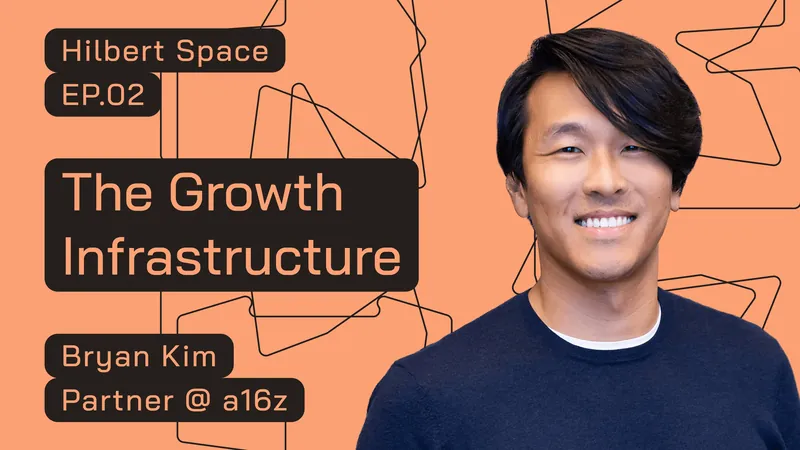
EP.02: The Growth Infrastructure
In this episode, we sit down with Bryan Kim, Partner at a16z, to dig into what growth actually costs when it goes wrong, and what it takes to build the infrastructure to get it right. Bryan spent over five years at a16z backing some of the most ambitious consumer businesses of this era, including ElevenLabs, Function Health, Mirage, Partiful. Before that, he built and ran growth at Snap (from 100 people and zero revenue to 4,000 people and $2B in revenue) and developed firsthand what it means to think about growth as a systems problem, not a metrics problem.
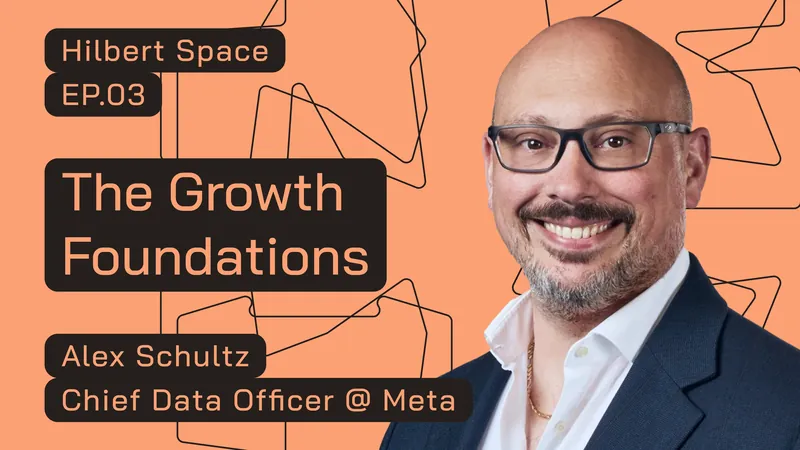
EP.03: The Growth Foundations
In this episode, we sit down with Alex Schultz, Chief Data Officer at Meta (and the person widely credited as the founder of the modern growth practice) to unpack what growth actually is, why most teams get measurement wrong, and how AI is rewriting the implementation of growth's timeless principles. Alex breaks down why growth has never really changed: it's about growing the active users of your product, full stop. We cover that the biggest failures don't come from picking the wrong metric, but from unexamined biases, accidental p-hacking, and top-down pressure to ship what the data says you shouldn't. The perfect metric matters far less than doing the analysis right.
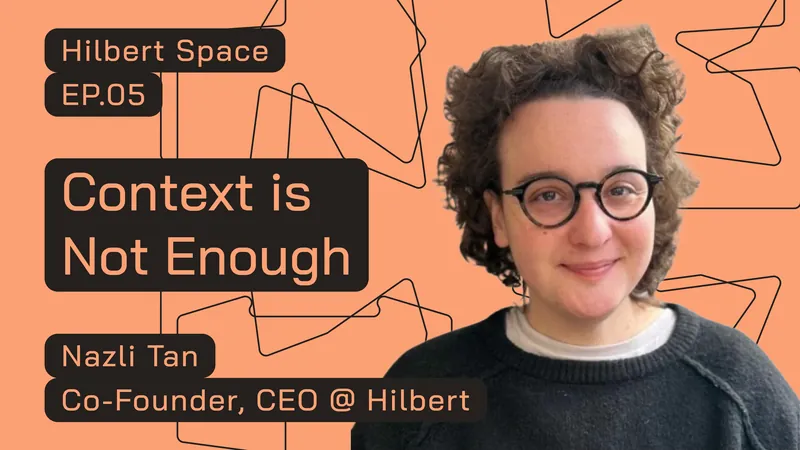
Inside a Mathematician’s AI Harness for Fortune 500
a16z just led a $28M Series A in Hilbert, a company that puts AI agents to work on growth. One of its first customers is a Fortune 500 company. Most people building with AI agents think more context is the fix. Nazli Tan, cofounder and CEO, who previously led growth at Getir ($12B), thinks the opposite. Context usually means someone writes down what a "good customer" is and the agent runs with it. But those definitions are mostly human guesses. Her answer is that the definition is already sitting in your data. Hilbert trains deep learning models on years of history, and those models decide who's a good customer. Same customer, same answer, every time. Their agents aren't even allowed to do math beyond rounding.