EP.03: The Growth Foundations
In this episode, we sit down with Alex Schultz, Chief Data Officer at Meta (and the person widely credited as the founder of the modern growth practice) to unpack what growth actually is, why most teams get measurement wrong, and how AI is rewriting the implementation of growth's timeless principles. Alex breaks down why growth has never really changed: it's about growing the active users of your product, full stop. We cover that the biggest failures don't come from picking the wrong metric, but from unexamined biases, accidental p-hacking, and top-down pressure to ship what the data says you shouldn't. The perfect metric matters far less than doing the analysis right.
Alex Schultz, Meta’s first Chief Data Officer, joins Nazlı Tan and Ceyda Erten to talk about what growth really is and why his definition has never changed. He covers how to organize growth teams, why most metric gaming is accidental, how trusted execution environments could change data access, and why he has a “day one” mindset about AI.
Key takeaways
- Growth means growing the active users of your product, and it can be formalized as acquisition, activation, activity and virality, with product, data and marketing working across all four.
- Don’t let the perfect be the enemy of the good on metrics. Any active-user metric beats a registered-user metric; checking your own and your team’s biases matters far more.
- Most metric gaming is accidental, such as stopping an experiment the moment it turns green, by people who don’t realize they are looking at noise.
- AI-written, validated queries run inside a trusted execution environment could let analysts answer questions with aggregate data without anyone touching user data.
- For most consumer verticals, paid direct response marketing is a highly effective lever, as long as you measure incrementality with randomized controlled tests, matched market tests or on-off tests.
Chapters
- 00:00 Welcome & Alex's new role as Meta's first Chief Data Officer
- 03:02 What is growth? Alex's definition, unchanged
- 05:46 Org design: virtual pods vs. centralized growth teams (eBay vs. Meta & DoorDash)
- 09:15 Gaming the metrics: why the perfect metric doesn't matter
- 12:01 Accidental p-hacking: most metric gaming isn't malicious
- 15:10 Trusted execution environments: answering questions without touching user data
- 19:42 The cost of data: the memory crunch & why every data warehouse is wasteful
- 24:39 Paid marketing vs. PLG: pushing back on "paid doesn't work"
- 28:51 Measurement is everything: RCTs, matched market tests, incrementality
- 31:24 Marketing to agents, audience-of-one creative, and the next five years
- 33:25 Creativity as theory, not pixels: what physicists/mathematicians teach growth people
About the guest
Alex Schultz is Chief Data Officer at Meta, the company’s first. He joined Facebook in 2007, built and ran the data science and data engineering teams as VP of Analytics, and served as CMO through the company’s rebrand. He studied physics at Cambridge and is widely credited as a founder of the modern growth practice.
“My definition of growth remains the same, which is growing the active users of your product.” — Alex Schultz, Chief Data Officer at Meta
“Accurate measurement is the core of all of this.” — Alex Schultz, Chief Data Officer at Meta
“The principles underlying everything are the same. … But the implementation of the principles is being revolutionized.” — Alex Schultz, Chief Data Officer at Meta
Read the full episode summary
Where Hilbert’s story starts
Episode three of Hilbert Space features Alex Schultz, who joined Facebook in 2007, built and ran its data science and data engineering teams as VP of Analytics, served as CMO through the rebrand, and has just become Meta’s first Chief Data Officer. Nazlı Tan explains why the conversation matters to her: her path into growth began with watching Alex’s Startup School talk on how to get users and grow, which she made mandatory viewing for everyone on her team.
Growth, defined
Asked for his definition of growth today, Alex says it has not changed: growth is growing the active users of your product. That holds for almost any consumer-facing product. Even a washing machine maker wants people to be acquired, activate and use the product for as long as possible; it is just harder to measure.
He also believes growth can be formalized. At eBay the framework was acquisition, activation and activity. At Meta it adds virality, which he thinks is more correct, because even eBay grew through word of mouth. Across all four elements sit three layers: product, data and marketing. The weight of each varies. In-product work is central to activation and activity and less central to acquisition, though you still need to optimize the landing page.
Organizing growth teams
Asked whether problems arise when those functions sit in separate departments. Alex says yes, and contrasts eBay with Meta and DoorDash. At eBay, product and marketing were separate, each with independent data teams. Marketing emails required moving data through a third-party vendor and went out stale but well marketed, while product notifications went out instantly but were poorly marketed. He points to DoorDash, where the CMO and head of growth worked in a tight loop, and to what Meta did right: bringing the functions together.
There are two ways to do that: centralize everything under one growth leader, or create a virtual team across functions. Alex prefers the virtual pod. Marketers report to someone who can grow their careers as marketers, product and engineering stay in deep technical teams, and data people report independently, so they are held to the standard of being correct rather than making the boss happy. Either route can work, he says, as long as the connection exists.
The perfect metric matters less than you think
On measurement, Alex says the same toolkit applies everywhere, including his current work on Meta business agents: retention curves, triangle charts, monthly actives, the new user experience and what correlates with churn and retention. His main advice is not to let the perfect be the enemy of the good. Daily, weekly, monthly or quarterly actives are all fine; he personally prefers monthly. What matters is using an active-user metric rather than a registered-user metric.
What matters more is checking biases. He recommends Richard Heuer Jr.’s Psychology of Intelligence Analysis, which walks through analytical mistakes such as observer bias, survivor bias and recency bias.
Most metric gaming is accidental
There is always some gaming of metrics, Alex says, but the vast majority happens by accident. P-hacking is the big example: someone runs an experiment, sees the metric go green and stops it, without asking whether it reached 95% confidence or just happened to turn green on the 20th day. Most people doing this are not statisticians and do not realize they are looking at noise. Knowing how to do the analysis right matters more than having the perfect metric. Alex adds that top-down “just ship it” pressure is a big problem too.
Answering questions without touching user data
In his new role, Alex sees user data privacy as the main data limitation in large companies, and he calls that a good thing. To do his job he only needs aggregate data, yet advanced queries still require permission on user-level data or delegation to a team. AI changes this. AI can write a query, other models can validate it, and the whole thing can run inside a trusted execution environment, an approach WhatsApp and Apple have used in some areas. Internally, Meta calls this a data VM. Analysts and executives see only aggregated, anonymized output. He believes this would protect users even better than today, and says it is a matter of when, not if.
He adds that AI is especially good at data science and data engineering, so teams could have “a million analysts in a data center” and move human work up to the logic, theory and creative layer.
The cost of data
On cost, Alex notes that the industry is in a memory crunch driven by AI training, which makes data doubly expensive right now. His main point is that most teams store and process data wastefully: duplicated tables, child tables backed up live in three places, and no discipline around a minimum viable data warehouse. His central analytics team has used agents for basic data engineering, such as following table lineage, finding duplicates and canonicalizing information, and he estimates they have saved a double-digit percentage of Meta’s ads data warehouse this year.
Paid marketing still works
The hosts raise a frustration: much online growth writing comes from B2B and product-led growth and claims paid marketing does not work. Alex says it depends on the business. Google grew largely through partnerships. But ByteDance, the biggest consumer success of the last decade in his view, excelled at classic direct response marketing. So did hit games like Candy Crush, Booking.com and Expedia, and Amazon, which he calls the biggest media buyer on Earth. For most verticals, he says, paid direct response is an extremely effective lever, and accurate measurement is the core of it: randomized controlled tests first, then matched market tests, then on-off tests.
A day-one mindset
Asked whether growth is a solved practice, Alex says no. He has a “day one” mindset, and recently restructured his own job. Over the next five years he expects companies will need to market to agents and rethink SEO, commerce and ads. The principles stay the same, including incrementality and brand, since agents will represent people with brand preferences, but the implementation is being revolutionized. He asks what you would do with infinite mid-level engineers, data scientists and marketers, or with audience-of-one targeting and creative.
He closes on creativity. Physicists like Fermi, Feynman, Planck and Bohr were extraordinarily creative, but in theory and models, not pixels. AI tools let growth people move to that higher level of creative thinking, which is harder than changing the color of a button.

Hilbert Space EP.04: Building for Global Growth with Carles Reina, Baobab Ventures
In this episode, we sit down with Carles Reina, managing partner of Baobab Ventures and a key leader behind ElevenLabs’ global growth. We unpack what it actually takes to build and scale a company across markets, and how AI is changing the way teams think about GTM.
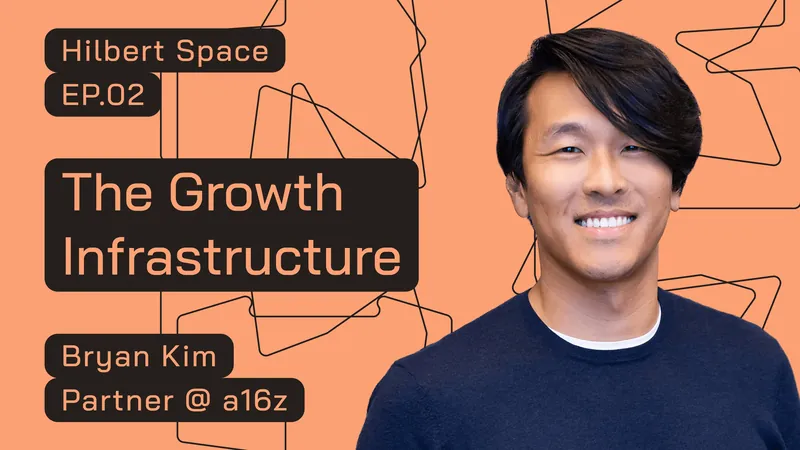
EP.02: The Growth Infrastructure
In this episode, we sit down with Bryan Kim, Partner at a16z, to dig into what growth actually costs when it goes wrong, and what it takes to build the infrastructure to get it right. Bryan spent over five years at a16z backing some of the most ambitious consumer businesses of this era, including ElevenLabs, Function Health, Mirage, Partiful. Before that, he built and ran growth at Snap (from 100 people and zero revenue to 4,000 people and $2B in revenue) and developed firsthand what it means to think about growth as a systems problem, not a metrics problem.
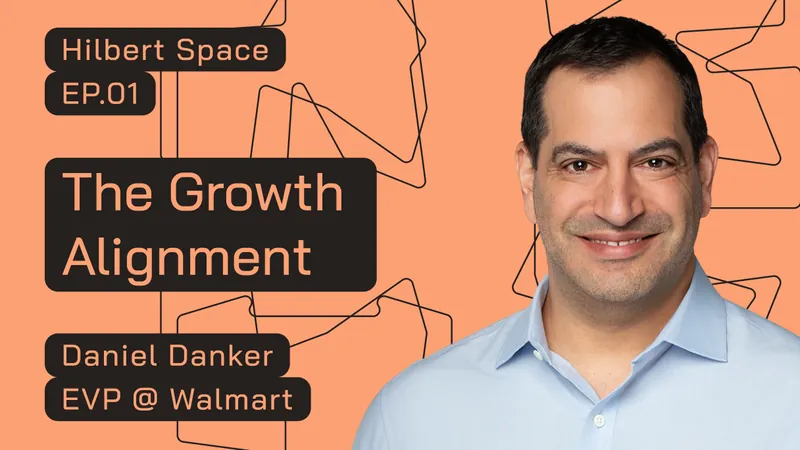
EP.01: The Growth Alignment
In this inaugural episode of Hilbert Space, we sit down with Daniel Danker, EVP of AI Acceleration, Product and Design at Walmart, to unpack why sustainable growth is more complex than it looks, and how AI is finally giving retailers the tools to get it right.