Hilbert Space EP.04: Building for Global Growth with Carles Reina, Baobab Ventures
In this episode, we sit down with Carles Reina, managing partner of Baobab Ventures and a key leader behind ElevenLabs’ global growth. We unpack what it actually takes to build and scale a company across markets, and how AI is changing the way teams think about GTM.
Carles Reina, managing partner of Baobab Ventures and a key leader behind ElevenLabs’ global growth, joins the Hilbert team to talk about building a “global hyperlocal” company. He explains why every market needs its own go-to-market motion, why velocity of learning matters, and why AI agents still struggle with the relationship side of selling.
Key takeaways
- There is no universal growth playbook. At ElevenLabs, each market needed a different motion, from technical selling in India and North Asia to resellers in Mexico and Brazil to direct selling in the US.
- A “global hyperlocal” company builds at global scale but implements and drives adoption locally, so customers in each country feel it is their company.
- Experimentation was the main growth engine for ElevenLabs. Some mess helps early speed, and teams professionalize data and agents later as they scale.
- LLMs tend to stay within the distribution, while great go-to-market often depends on finding outliers. Agents that repeat the same thing risk getting GTM wrong.
- Selling is a relationship problem. If you want agents to sell, you have to solve personality and relationship-building, not just automation.
Chapters
- 00:00 The future of AI agents, GTM & growth
- 02:07 What Carles looks for in early founding teams
- 02:57 What growth actually means: product + distribution
- 04:16 Why every market needs a different GTM motion
- 05:28 Building a global hyperlocal company
- 09:52 Experimentation and the velocity of learning
- 11:11 AI, efficiency, and the future of company-building
- 13:19 Why SF billboards are aimed at VCs, not customers
- 15:20 Why AI agents need a consistent backbone
- 19:44 Why selling is ultimately a relationship problem
- 23:39 Why companies struggle when they go global
- 27:19 Investing in research, education & biotech
- 30:31 What math and science can teach us about AI
About the guest
Carles Reina is managing partner of Baobab Ventures and a key leader behind ElevenLabs’ global growth. He has spent around 12 to 13 years in the startup ecosystem, including the early days of Tractable, which became a unicorn within three years. He is one of Hilbert’s earliest investors.
“The playbook concept needs to disappear from people’s brains to be able to actually unlock growth.” — Carles Reina, Managing Partner at Baobab Ventures
“Selling and doing go-to-market is a relationship problem. So if you want to do it with agents, fix the relationship.” — Carles Reina, Managing Partner at Baobab Ventures
“We build things at the global scale, but the implementation and adoption of it is at a local level.” — Carles Reina, Managing Partner at Baobab Ventures
Read the full episode summary
Why Carles backs startups
Carles Reina has spent around 12 to 13 years in the startup ecosystem, which he says is where he built his career, made his money and has the most fun. He is drawn to startups because they exist to solve big, difficult problems.
In founding teams, he looks for drive and “a chip on their shoulder”: people who need to prove something. He also likes technical teams and unsexy problems, because VCs tend to chase the same things out of FOMO.
Growth as product plus distribution, one layer deeper
The hosts describe growth as product plus distribution, with distribution meaning go-to-market. Carles agrees but adds a deeper layer to each. On product, he sees companies that once built only product now positioning themselves as research hubs with their own labs, because core research builds a bigger moat, even when it sits on top of someone else’s LLMs.
On distribution, beyond B2C, prosumer and B2B, there are many ways to build a deeper motion: global system integrators, resellers, cloud providers and more. His main lesson from ElevenLabs is that each market you enter will likely need a different motion or a different mix of channels.
Every market needs its own motion
Carles gives examples. In markets such as North Asia, China or India, buyers are often very technical teams who go deep into what they are buying and how they will implement it, so you need deep product expertise. In the US there are more business personas, and the motion is to go direct, both top-down and bottom-up, without resellers. In Mexico, resellers can work very well. There is no single playbook, he says. Each company ends up with its own, and even within one company each market ends up with a different one.
Building a global hyperlocal company
Every year at ElevenLabs, Carles writes a revenue vision: the theme for revenue that year, how the company will reach its targets and which big bets it will make. The premise for 2025 was “we’re building a global hyperlocal company.” The product is built at global scale, but implementation and adoption happen locally. Customers in India should feel ElevenLabs is an Indian company that is there for them, and customers in the UK should feel it is a UK company. Some bets in each year’s vision will not materialize because markets change, but the exercise forces the team to think ahead. That, he says, is fundamentally growth.
Data, rigor and the velocity of learning
Asked about the role of data, Carles is candid: ElevenLabs was not especially rigorous early on. He started by running many experiments and recording them in Excel and Google Sheets. As the company grew, it had to professionalize, and over the past year it has become much more disciplined about data and has built internal agents that use customer data to decide where to target. Building a company is messy, he says, and some mess helps you move quickly and iterate, though too much becomes counterproductive. Experimentation was the main engine.
From the Hilbert side, the hosts describe their approach: nobody can promise to grow you twice as fast, but you can follow a standard procedure of forming hypotheses, experimenting and learning fast. Some ideas will work and some will not, and experimentation is the only reliable way to stack additional percentage points of growth. Automating that loop matters because velocity of learning is a competitive advantage. You cannot beat a team that learns much faster than you.
The limits of efficiency
Asked what the startup world is getting wrong, Carles points to the obsession with replacing as many people as possible. He thinks it is right and wrong at the same time. You may be able to build a ten-person unicorn, but eventually you need to service customers and have real substance, and he does not think technology is advancing fast enough for that. He expects a reckoning over how much can be automated. He is not sure he wants a world where companies are run entirely by agents, because it would feel like it is “missing a soul.”
He also shares an observation about San Francisco: billboards for AI agent companies are often aimed at VCs, not customers, because the customers are not in San Francisco. Maybe, he suggests, you should advertise where your customers actually are.
Agents need a backbone and a relationship
Nazlı Tan adds Hilbert’s view: LLMs are excellent for some purposes, but other algorithms are stronger for others, and combining them is more powerful. Ask an LLM for your most valuable customers and it might return the top 10% by AOV one day and frequency champions or the lowest-discount customers the next. She says she could not deploy millions of dollars on a system that does not give the same answer every time, which is why Hilbert has a deep learning backbone and invests heavily in evaluation.
Carles puts it less diplomatically: agents are dumb. They are programmed to do one thing, give different answers to the same question and cannot handle the real world. For go-to-market, he argues that LLMs are not good at finding outliers, the things outside the distribution, and repeating the same motion will not produce a business that is unique. Above all, selling is a relationship problem. If you want agents to sell, you need to give them personality and a way to build real connection.
Why playbooks fail
The biggest growth problem he has seen is a mentality: people arrive with playbooks from previous businesses and try to force them onto a new one. When a GTM candidate tells him they have a playbook, he says, they have started on the wrong foot. Playbooks can get you started, but adapting to each local market is the difference between good and great. He contrasts Lyft’s more centralized, rigid model with Uber giving each market more freedom, and recalls Tractable trying to apply the same playbook in the US and Japan before it began to fall apart. Many US companies that go global end up retreating or handing go-to-market to resellers because they cannot adapt. His advice: experiment.
Giving back
Away from tech, Carles grows baobab trees in Barcelona, Dubai and even London. He and his wife invest significantly in biotech without expecting a return, which he sees as a way to give back to society. The conversation closes on math and science as models for AI: experimentation, rigor and solid foundations, with success measured by solving hard problems.
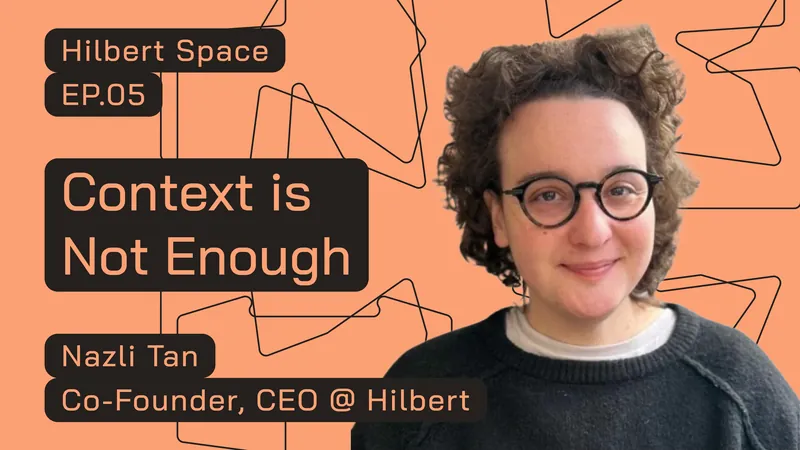
Inside a Mathematician’s AI Harness for Fortune 500
a16z just led a $28M Series A in Hilbert, a company that puts AI agents to work on growth. One of its first customers is a Fortune 500 company. Most people building with AI agents think more context is the fix. Nazli Tan, cofounder and CEO, who previously led growth at Getir ($12B), thinks the opposite. Context usually means someone writes down what a "good customer" is and the agent runs with it. But those definitions are mostly human guesses. Her answer is that the definition is already sitting in your data. Hilbert trains deep learning models on years of history, and those models decide who's a good customer. Same customer, same answer, every time. Their agents aren't even allowed to do math beyond rounding.
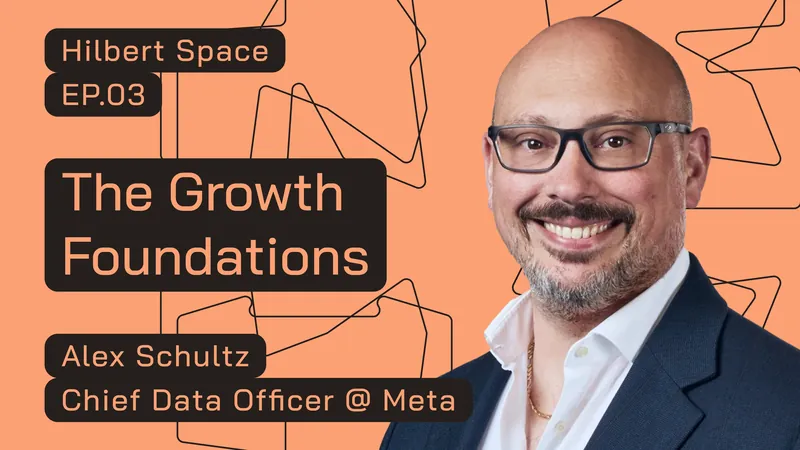
EP.03: The Growth Foundations
In this episode, we sit down with Alex Schultz, Chief Data Officer at Meta (and the person widely credited as the founder of the modern growth practice) to unpack what growth actually is, why most teams get measurement wrong, and how AI is rewriting the implementation of growth's timeless principles. Alex breaks down why growth has never really changed: it's about growing the active users of your product, full stop. We cover that the biggest failures don't come from picking the wrong metric, but from unexamined biases, accidental p-hacking, and top-down pressure to ship what the data says you shouldn't. The perfect metric matters far less than doing the analysis right.
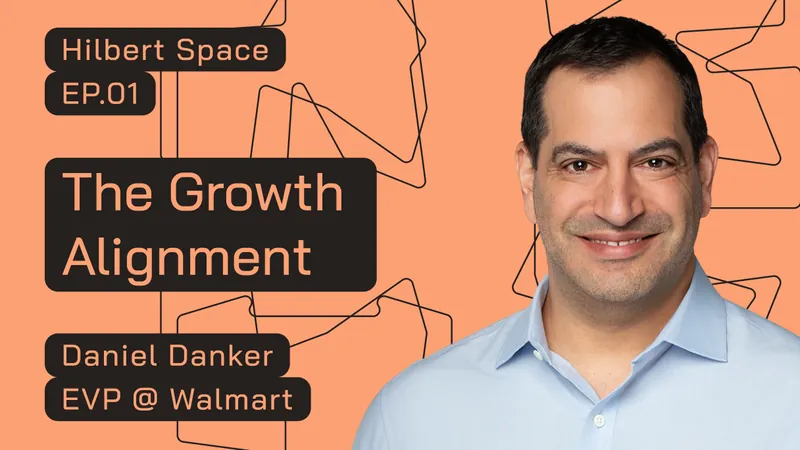
EP.01: The Growth Alignment
In this inaugural episode of Hilbert Space, we sit down with Daniel Danker, EVP of AI Acceleration, Product and Design at Walmart, to unpack why sustainable growth is more complex than it looks, and how AI is finally giving retailers the tools to get it right.